

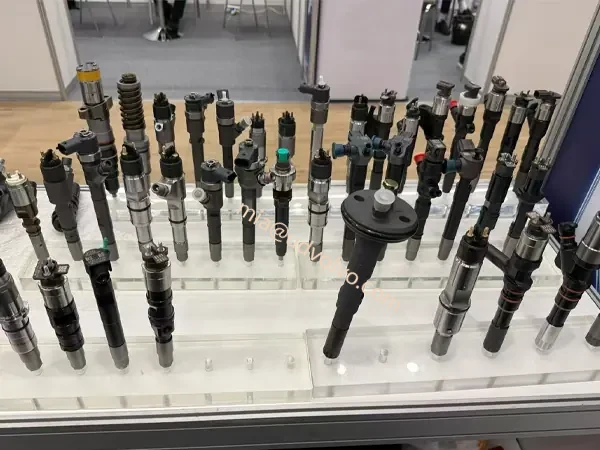
A single failing injector can quietly cost a fleet operator hundreds of dollars a month in wasted fuel, followed by a DPF failure, then a turbo problem, then a full engine rebuild. Injectors rarely fail without warning — the engine almost always tells you first, usually weeks before the part actually dies.
Here are the seven warning signs worth training your drivers and maintenance team to report, plus the order we recommend diagnosing them in.
1. Hard starting and long cranking
What it looks like: The engine turns over several seconds longer than usual before firing, particularly when cold. Sometimes it fires, stumbles, and needs a second attempt.
Why it happens: A worn injector drips instead of atomising. Rail pressure drops below the threshold needed for a clean start because fuel is leaking past the control valve or nozzle seat instead of building pressure.
Check first: Battery voltage and cranking speed, then fuel rail pressure at cranking. If pressure can’t build, look for injector return-flow losses before replacing the high-pressure pump — the pump is frequently blamed for what is actually injector leakage.
2. Rough idle and vibration
What it looks like: A rhythmic shake at idle, sometimes described as the engine “missing.” Often smooths out at higher RPM.
Why it happens: Each injector is designed to deliver a precise fuel quantity per stroke. When one delivers more or less than its neighbours, cylinder contribution becomes uneven and the engine loses balance. This is the single most reported injector symptom, and one of the most misdiagnosed — it’s routinely blamed on engine mounts or a failed MAF sensor.
Quick check: Run a cylinder contribution or fuel trim test with a scan tool. The offending cylinder will stand out immediately.
3. Black, white or grey exhaust smoke
Smoke colour tells you which direction the problem runs:
| Smoke colour | Most likely cause |
| Black | Over-fuelling or poor atomisation — injector dripping, damaged spray pattern, or restricted air intake |
| White (cold engine) | Unburned fuel from poor atomisation; may also indicate glow plug failure |
| White (continues when warm) | Severe injector leakage, incorrect injection timing, or coolant entering the cylinder |
| Grey-blue | Oil being burnt alongside incomplete atomisation — oil reaching the combustion chamber |
Persistent white smoke after warm-up is the most serious of the four — do not keep driving on it, as raw fuel washes the cylinder walls and quickly destroys the oil film.
4. Rising fuel consumption
What it looks like: A 10–20% jump in fuel use with no change in routes, load or driving style.
Why it happens: This is the expensive symptom, because it is invisible day to day. Either the injector is over-fuelling, or the ECU is compensating for a weak cylinder by increasing injection across the board. By the time this shows up clearly in your fuel records, the injector has usually been degrading for months.
Recommendation: Track fuel per 100 km (or per operating hour for machinery) per vehicle. A single unit drifting outside its baseline by more than 5% deserves inspection.
5. Loss of power under load
What it looks like: Sluggish acceleration, struggling on grades, hunting up slopes. Often accompanied by limp-mode and a check-engine light.
Why it happens: One cylinder under-delivering means the engine simply produces less torque, and modern ECUs will derate to protect the drivetrain once rail pressure deviation is detected.
6. Knocking or “nailing” noise
What it looks like: A sharp metallic knock from the top of the engine, most obvious at idle or light load.
Why it happens: Injectors that drip or deliver late cause a second, uncontrolled ignition event after the main combustion — diesel knock. Knock is destructive, not just noisy. Sustained knocking erodes piston crowns and damages bearings, so it should be treated as urgent rather than cosmetic.
7. Strong diesel smell in the engine oil
What it looks like: Oil level rising rather than falling, with a distinct fuel odour on the dipstick.
Why it happens: Poorly atomised fuel wets the cylinder wall and washes past the rings into the sump, diluting the oil. Diluted oil loses its film strength and Lubricity leads directly to bearing and turbo wear.
⚠️ This is the one symptom that turns a cheap repair into a full engine overhaul. If you see oil level rising, stop running the engine and diagnose immediately.
The recommended diagnosis sequence
Don’t start by replacing parts. Work through this order — it prevents the most expensive mistake in this category, which is replacing the high-pressure pump when only the injectors were leaking.
- Scan for fault codes and check rail pressure deviation. Modern ECUs usually flag which cylinder is compensating.
- Inspect fuel quality and the filtration system first. Contaminated fuel is the root cause behind most injector failures, and it will destroy the replacements too.
- Run a leak-off (return-flow) test. Compare return volume between injectors — a unit returning significantly more or less than the others is failing. This is fast, cheap and highly reliable.
- Confirm the application. Wrong or uncoded injectors produce symptoms identical to failed ones. Verify the part number and calibration code (Bosch IMA / Denso QR / Delphi coding) against the engine before condemning the part.
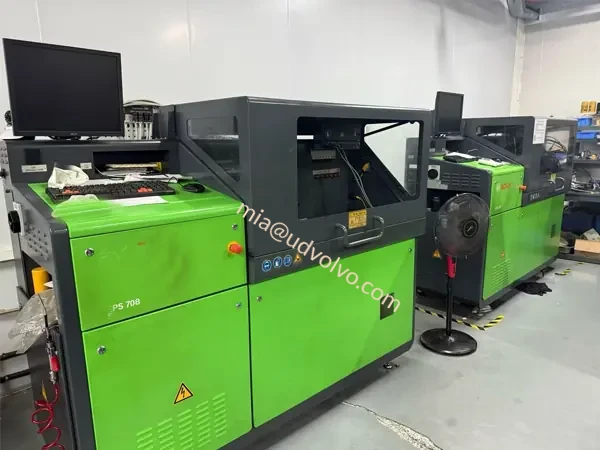
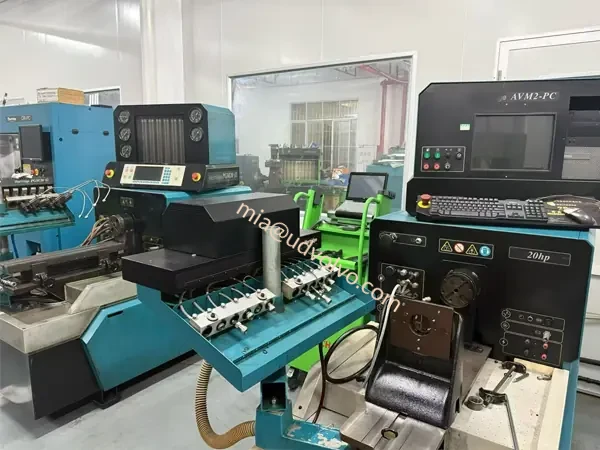
- Remove and bench-test. Testing injection quantity, return flow, spray pattern and response time on a calibrated bench is the only way to know whether a unit can be salvaged or must be replaced.
Repair, recondition, or replace?
| Situation | Recommended action |
| External carbon deposits only | Clean, then bench-test and reuse |
| Worn nozzle needle or control valve | Do not disassemble — replace the complete injector assembly |
| Calibration code missing or unprinted | Replace — the ECU cannot match the injector, raising consumption and emissions |
| Metal debris from the high-pressure pump | Flush the entire system to avoid destroying the new injectors |
Important: Common rail components are matched to micron tolerances. Field disassembly without a clean-room environment and calibrated bench will not restore them — this is why the standard industry position is to replace the complete injector assembly rather than rebuild it on site.
Preventing repeat failure
Most premature injector failure traces back to one thing: fuel contamination. Installing a new set without addressing the cause almost guarantees the same failure within months.
- Replace fuel filters at the specified interval — do not extend it
- Drain water separators regularly, especially in humid and tropical operating regions
- Buy from fuel sources with proper storage and filtration
- If contaminated fuel is suspected, sample and test before diagnosis
FAQ
Q: How long do common rail injectors typically last? A: Service life depends overwhelmingly on fuel quality and filtration. With clean fuel and filters changed on schedule, most units run well past 150,000 km; contaminated fuel can destroy a set in a fraction of that.
Q: Can I replace only the failing injector? A: Technically yes, and for a single confirmed failure it’s acceptable. However for sets that have run high mileage together, replacing as a matched set is usually more economical, since the remaining units are typically at a similar wear point.
Q: Do new injectors need coding? A: Bosch IMA/ISA, Denso QR and Delphi calibration codes tell the ECU how that specific injector behaves. Skipping or mismatching the code causes rough idle and elevated consumption even with brand-new parts.
Q: What’s the difference between cleaning and replacing? A: Cleaning removes external carbon deposits. It cannot restore internal wear on the nozzle needle or control valve — the parts that actually determine whether the injector meets specification.
Need a replacement set?
Hubei Xinyucheng Technology Co., Ltd supplies diesel common rail injectors, unit injectors and common rail fuel pumps for Japanese, European and American applications — trucks, buses, construction machinery and industrial engines. Send us your OEM part number or engine model and we’ll match it with cross-reference support.
- Exact OEM matching with cross-reference support for Bosch, Denso and Delphi
- Factory tested and calibrated — every injector is flow tested before dispatch
- Ready stock and fast dispatch to Southeast Asia, Africa, South Africa and Europe
👉 Get a quote · Browse all products · Download the catalogue